Friday, October 26, 2012

October 26, 1985

The Most Important Day In History


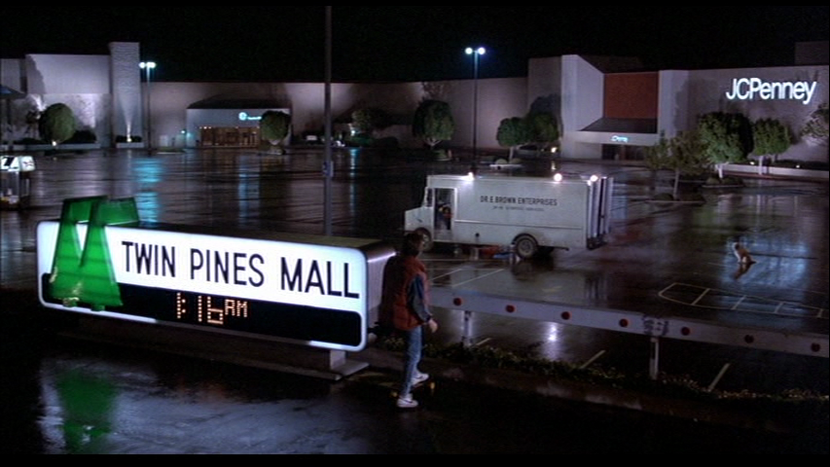
Today marks the 27th Anniversary of the most important day in history, that is the day TIME TRAVEL was invented.  In the parking lot of Twin Pines Mall [or Lone Pine Mall] Doc Brown's dog Einstein became the world's first time traveler.  Or so the history books say.


Time Travel Panel from the Delorean Time Machine


Twin Pines Mall - Before Marty Goes Back to 1955


Marty Arriving Back From The Past At Lone Pine Mall (Because He Killed a Pine Tree Back in 1955)


Back To The Future is one of my all time favorite movies and all time favorite movie franchises.  It was expertly done and the sequels were as good or perhaps even better then the original.

The premise of  Time Travel is a well worn theme in literature and movies.  Just thinking about it for a second I can come up with about a half a dozen different reference to time travel, such as:

HG Wells
Back To Future
Star Trek
Logans Run [The TV Series]
Journeyman (NBC)
Quantum Leap
Pern (Dragonrider) Novels
Time Tunnel
Peggy Sue Got Married
Somewhere In Time
Kate & Leopold


In Back To The Future time travel is made possible by by a device known as "The Flux Capacitor" Ooooooooooo........


As most of us know, this particular time machine was built into a gull wing car of the 80's the iconic Delorean !


Once the time circuits were turned on, a speed of 88 mph in the Delorean would activate a nuclear reaction which would generate the 1.21 Giga Watts of power into the Flux Capacitor causing a jump in time for the occupants of the time machine.  I will say that it is 1.21 Giga Watts, not Jigga Watts.  The movie got it wrong.

At some future time [yuk, yuk ...] I will go into great detail about the Back To The Future movies.  However, for now I would just like to discuss the implications of time travel on a limited or wholesale basis.

Much of the books and movies are the same with regard to time travel.  A time machine is built, someone or a group of people goes back in time.  They try to prevent something from happening or perhaps they accidentally alter future events by there mere presence in the past.  The later is the formula for Back To The Future.

We also need to deal with "The Space Time Continuum".  Events of the future are a direct and indirect result of an accumulation of all events in the past.  We are currently on one thread of time because of the accumulation of all events that have happened before this exact moment in time.  Change even one small event and the entire future of said time traveler can be altered dramatically.

In Star Trek the original series (Star Trek TOS) episode "City On The Edge Of Forever", McCoy accidentally goes back into time and saves the life of Edith Keeler a missions worker, from being hit by a car in the 1930's.  Because of this one alteration of the time line, She is allowed to lead a pre-World War II pacifist movement that delays the US entry into WWII, and thus Germany Wins the war and 25th century USS Enterprise ceases to exist.


How many of us wish we could go back to some place in our lives and do something dramatically or even slightly different.  In the movie Mr Destiny, Jim Belushi's wishes that as a high schooler  he didn't strike out in a critical high school baseball game.  In a "It a Wonderful Life-esque" moment, he gets this wish and  sees his life on that different time line.  He gets the girl, he get the job, he gets the money.  While things on the surface appear to be perfect, that quickly unravels to a point where he is framed for a murder that he didn't commit and everything that he cherished and loved in his former life goes sour.


Lastly in our examination of time travel is the concept that sometime the things we are trying to prevent, are actually caused by the act of trying to prevent them.  Many of us know the classic 1970's movie Logan's Run.  Did you know there was a short lived TV series (on CBS I believe) in 1977/78 ?


One of the best episodes I have ever seen dealing with Time Travel (Man Out of Time) comes from this short lived TV series. The plot is as follows: The present day world,  a scientist (Dr Eakins) works on a time machine, in order to find out information that might prevent a nuclear war in his own time.  He travels 100 years into the future to the time of Logan and Jessica.  At the end of the episode it is found out (through a television monitor and tape machine sent from the past to Logan and Jessica), that the knowledge that time travel was possible, was the tipping point in starting World War III.  World leaders thought that time travel could be used as a weapon and that this was too big a threat.  [Theoretically, One could go to the past and kill all your enemies when they were infants].  So in the end time travel which was originally used to try to prevent  a war, was the single most important factor in starting the war.  Some food for thought.

So now you know that (using a sports reference), if only he made that catch (football), or if only he had walked (baseball) ...  then the argument  "we would have won when Joe Schmoe hit that home run...."  isn't exactly true.  As we have discovered in our journey today, the home run might not have happened because that alternate future (with the walk instead of an out) would have caused a different series of pitches from the pitcher and the results could have or would have been different. Don't mess with the space-time continuum.

What we are and where we are in our own lives is a result of the accumulation of all past events both of ours and others making.  We can't change the past (and probably shouldn't), but we can shape the future from our present actions.  You never know what the consequences of one act of kindness will be !

For me, I will just quietly celebrate the anniversary of Time Travel and anxiously await for 2015 [of Back To The Future II].  In just a little more than 2 years I can get a hover conversion for my car that I have always wanted, purchase my own Mr. Fusion, and buy a new Hoverboard from Mattel !


Tuesday, October 16, 2012

1000 Days Till Pluto

Even though in recent times the Planet Pluto was demoted from "full" planet status, to that of "Dwarf" planet status (with apologies to Snow White), it is still a very interesting object in our solar system.  It has an atmosphere at least 3 moons and possibly even water on it's surface or interior.


Best Image to date we have of Pluto and it's moons.

What you might not know is that for the past 7 years there has been a probe sent by the United States that has been steadily making it's way toward this icy 400 degrees below zero planet and it's nearly equal in size moon Charon (pronounced "Karon").


Trajectory of New Horizons Spacecraft as of October 16, 2012


Launched in January 2006 the New Horizons spacecraft will arrive at Pluto in June of 2015.


New Horizon's Spacecraft

Pluto was the only outer planet missed by the planetary tours of the Voyager 1 and Voyager 2 spacecrafts of the late 70's and early 1980's.  Here is a you tube video showing the 2 spacecraft's trajectories


Jupiter As Imaged From Voyager 1


Saturn As Imaged From Voyager 1


Uranus as Imaged From Voyager 2


Neptune As Imaged From Voyager 2


Only one thousand more days folks...  Can't wait ... counting the minutes already ....

What New Discoveries Will Be Made in Just 1000 days ?

Wednesday, October 10, 2012

Willie Mays Final Curtain Call

Musings of Game 2 of the 1973 World Series


1974 Topps Baseball Card of Game 2 of the 1973 World Series.  Willie Mays At the Plate.

Sunday (October 14th) marks the 39th anniversary of Game 2 of the 1973 World Series between the New York Mets and the Oakland Athletics.  The New York Mets had a spectacular finish to the 1973 regular season, jumping from last place [6th place] on August 30th to first place in the NL East by the end of the season.  Although they finished only 3 games above 500 (82-79) they won the division by 1.5 games over the Cardinals.  Dominated by strong pitching, the Mets won the best of 5 playoff series with the Cincinnati Reds, 3 games to 2, and with it the National League pennant, and the right to face the Oakland A's in the 1973 World Series.

The A's were the premiere team of the American League loaded with star players.    They had Catfish Hunter, Rollie Fingers, Sal Bando, Ken Holtzman, Vida Blue, John "Blue Moon" Odom, Gene Tenace, Bert Campaneris, Ray Fosse and Joe Rudi.  Many of these players left for other teams when free agency first appeared in the mid 70's, breaking up the A's dynasty.  In 1973 however, they were the American Leagues version of "The Big Red Machine".


The Series would follow the 2-3-2 format, with the first two games in Oakland, the next 3 in New York at Shea Stadium and the final two if necessary back in Oakland.  Game 1 of the series as expected was dominated by pitching as the A's won a pitchers duel by a 2-1 score (Knowels vs Matlack).

With the Mets down one game to none, they were in need of a win so that the series might be knotted for the return trip to NY, but it wasn't going to be easy and it wasn't going to be fast.

It was an absolutely gorgeous early Autumn day in Oakland.  Warm temperatures, cloudless sky and a sun drenched baseball diamond.  Once Bob Hope and Jack Benny had thrown out the first pitches, the real game was ready to begin.  It was a 1:05 pm west coast start time, which mean that in New York it was a little past 4 pm.  I remember watching this game in glorious color on our family's "massive" 25 inch television set with my the entire family.  This was actually quite an event in my household, since I was the only real sports fan of the house and certainly the only baseball fan.  I was glad that I wasn't relegated to a 12" Black and White set in my room.

Willie Mays was 42 and in the final days of his hall of fame career.  He was facing a tougher opponent than a Catfish Hunter or "Blue Moon" Odom, an opponent that all athlete (and us normal folks) fear and eventually lose to,  Father Time.  During the season Mays as a player was a shell of his former self, though he was still my favorite player on the '73 Mets.   Due to age and injuries, Mays appeared in only 66 games that year and batted an anemic .211 with 6 home runs and 25 RBI's.   Like some of the baseball greats, the Mets were letting him retire on his "own terms", and by the end of the season Mays knew it was the end of the road for him.


Willie Mays In his hey day - 1966 Topps Card.  Mays hit 52 home runs in 1965 and was the NL MVP.
Rusty Staub was the MVP of the 1973 National League playoffs, however in game 4 vs the Reds he ran into the outfield wall an hurt his shoulder.  He had to sit out game 5 because of the injury.  In game 1 & 2 of the World Series he was forced to throw under handed or flip the ball to another outfielder to make long throws.

In game 2 with the Mets up by two runs going into the 9th inning Staub re injured his shoulder and Mays replaced him in the lineup.  In the bottom of the 9th inning Mays lost a fly ball in the cloudless sky and the ball dropped in for an official scorer double to lead off the inning (but the ball really should have been caught).  This allowed the A's to score 2 runs and tie the game in the bottom of the ninth.

In the 10th inning Harrelson lead off with a single.  With one out and Harrelson on third, Felix Millan hit a fly ball to short left field.  Buddy Harrelson tried to score on a sacrifice fly.  It was a bang bang play and the umpire called Harrelson out at the plate.  The video below shows the play and the still photo captures the drama of the moment, frozen in time.  I vividly remember watching that play live and that image of Mays and the umpire !  [the replay shows that Harrelson was safe].  Durring the commercial break between innings on our local NYC TV station [WNBC-TV Channel 4] the on air news reporter remarked about the play "He looked safe to me".


A moment frozen in time:  Mays pleads his case to the umpire in the top of the 10th inning
Like the moment Mays' helmet is frozen in mid-air.


The game moved into the 12th inning and with 2 on and 2 out Mays hits a Baltimore Chop off home plate and beat it out for a single, driving in Buddy Harrelson from 3rd for go ahead and game winning run.  It would prove to be the last hit and last RBI in his 22 year hall of fame major league career.  Mays would have one more at bat in the '73 series but would fail to get a hit.  However, for the one final day on a sun drenched Sunday afternoon in Oakland under the white hot lights of the World Series, Willie Mays gave his fans, old and new, one final memory that for some, would last a lifetime.


Epiloge 1:

This was the famous (infamous) Mike Andrews game in which Andrews would commit 2 errors in the game possibly costing the A's the win.  Charley Finley (the owner) had Mike Andrews declared injured after this game and forced the manager to put him on the Disable List.  Baseball Commisioner Bowie Kuhn vetoed the move and reinstated Adrews on the Oakland roster (and fined Finley).

Mike Andrews would never play another inning of ball in the major leagues.


Epiloge 2:

The Mets won game 2 by a score of  10 -7.  Tug McGraw the Mets bull pen ace and closer pitched an amazing 6 innings for the win.  That type of outing would never happen in todays game.

Epiloge 3:

Why didn't the Mets pitch George Stone (12-3 regular season record, an .800 percentage) in Game 7 ? ! ?  Stone was red hot down the stretch and in the playoffs.  In hind sight pitching Seaver on 3 days rest for Game 6 and John Matlack for Game 7 proved to be the wrong decision as they lost both games.  The Mets lost the '73 World Series 4 games to 3 to the A's.


Epiloge 4:

In 1973 this ranked as the longest World Series game in length of time at 4 hours and 20 minutes in the history of the World Series.  Present day, it now ranks 3rd behind game 3 of the 2005 WS (5 hours 41 minutes), and the Game 1 of the 2000 WS (4 hours 51 minutes).   The '73 series also marked one of the last times a World Series games would be played durring the day.

Monday, October 8, 2012

The Fight - Rose vs Harrelson

Today marks the 39th anniversary of Game 3 of the NLCS (National League Championship Series) between the New York Mets and the Cincinnati Reds in 1973.  Thirty Nine is an odd number to recall.  Why not 20 or 25 or 40. 

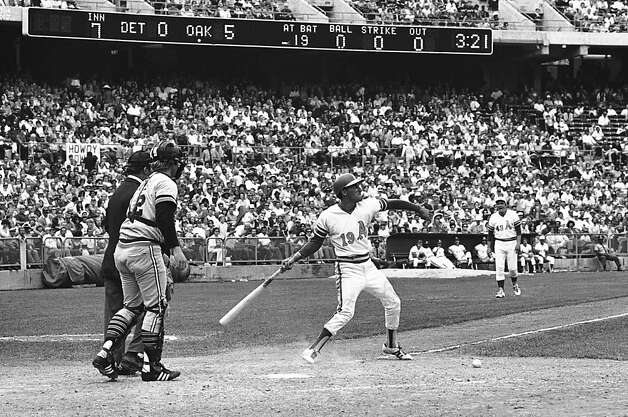
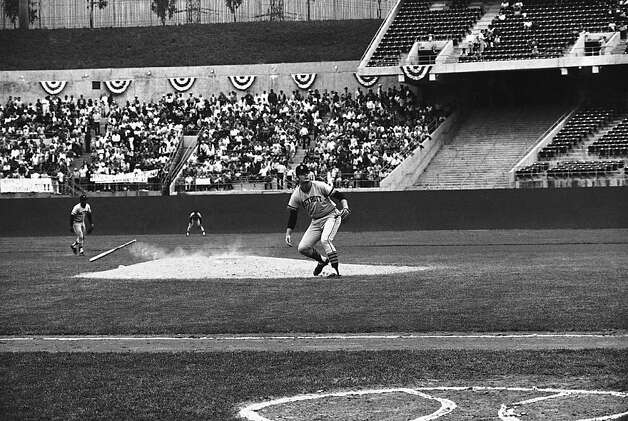
Well if I were to talk about the 40th Anniversary of something, then October 8th is also the 40th anniversary of the famous, or infamous bat throwing incident between Bert Camperneris of the A's and Lerrin Legrow of the Detroit Tigers in the 1972 ALCS.  Long story made short, Game 2 ALCS: Campaneris had three hits, two runs scored and two stolen bases when he came up against the Detroit Tigers reliever Lerrin LeGrow to lead off the top of the 7th.  On the first pitch LeGrow throws a fast ball inside and plunks Campaneris.  Camperneris loses it, winds up and flings his bat toward the mound and at LeGrow.  The bat made a couple of helicopter spins, before LeGrow manages to get out of the way.  Naturally a fight breaks out.  When all is said and done Campaneris and LeGrow are tossed from the game and Campaneris is suspended for the rest of the ALCS and the first 7 games of the 1973 season, but NOT the '72 World Series.


Campaneris winds up to hurl his bat at LeGrow


LeGrow gets out of the way as the bat flies by

I found a video of the play.

Click Here For Bob Costas video of the play

Here is a great baseball name from the past... winning pitcher game 2:  John "Blue Moon" Odom of the A's.


But I digress, on to the '73 NLCS....

It was October 8th 1973 on a fall afternoon in New York.  It was game 3 of a best of 5 series with the series tied at one game apiece.  The Mets were playing in front of a sellout crowd of 54,000. The previous day Jon Matlack of the Mets shut down the Reds for a 2-0 victory in Cincinnati .  Harrelson, the Mets light hitting shortstop made the comment.

 "He made the Big Red Machine look like me hitting today."

This did not go over well with Joe Morgan and the rest of the Reds.  Earlier in the day Morgan and Harrelson almost got into a fight about the comment while the Mets were taking batting practice.  Rusty Staub intervened and cooler heads prevailed.

Pete Rose was the leader and spark plug of the Reds "Big Red Machine".  He played hard and was all business when he went between the chalk lines.  The Mets started Jerry Koosman, while the Reds countered with Ross Grimsley.  The Mets jumped on Grimsley and by the 5th inning had built a very comfortable 9-2 lead thanks to two home runs by Rusty Staub and two hits by Koosman.

With one man out in the 5th inning Rose came up to the plate, and Jerry Koosman hits Rose with a pitch.  At first glance it appeared that Rose took a couple of steps toward the mound, thought better of it and then finally went to first base.  The next batter up was Joe Morgan.  Morgan grounded the ball to John Milner at first base who threw to short and back to first for a 3-6-3 double play.

Rose who always played hard, tried to take out Harrelson and break up the double play.  Harrelson thought that Rose was playing dirty (he may have been, or perhaps not, hard to tell).  Harrelson didn't like it and let Rose know by exchanging some words (something having to do with suction on a male reproductive organ).  Rose who was physically larger than Harrelson (out weighed him by 50 pounds), picked Harrelson up and threw him to the ground and then jumped on top of him.


Angle 1 of the fight


Angle 2


Players from both dugouts rushed to the field to pair off.  A few seconds later both bullpens, located in left and right field respectively also emptied.  It took some time but when the dust cleared, the game continued and unbelievably, no one was thrown out of the game !

In the next inning, New Yorkers being who they are, started tossing beer and whiskey bottles at Rose in Left Field.  Sparky Anderson, the manager of the Reds removed his players from the field for safety.  It took a contingent of Yogi Berra (manager), Tom Seaver, Rusty Staub, Willie Mays to go over to the Left Field stands and talk to the fans to calm them down and pleaded for them to stop throwing things.  An announcement was made over the PA system, that if anything else was thrown on the field, the Mets would forfeit the game.  The game continued and there were no more incidents that day.  The Mets won the game 9-2 and took a 2-1 series lead.  They won the series in five games with Tom Seaver pitching for the series clincher.

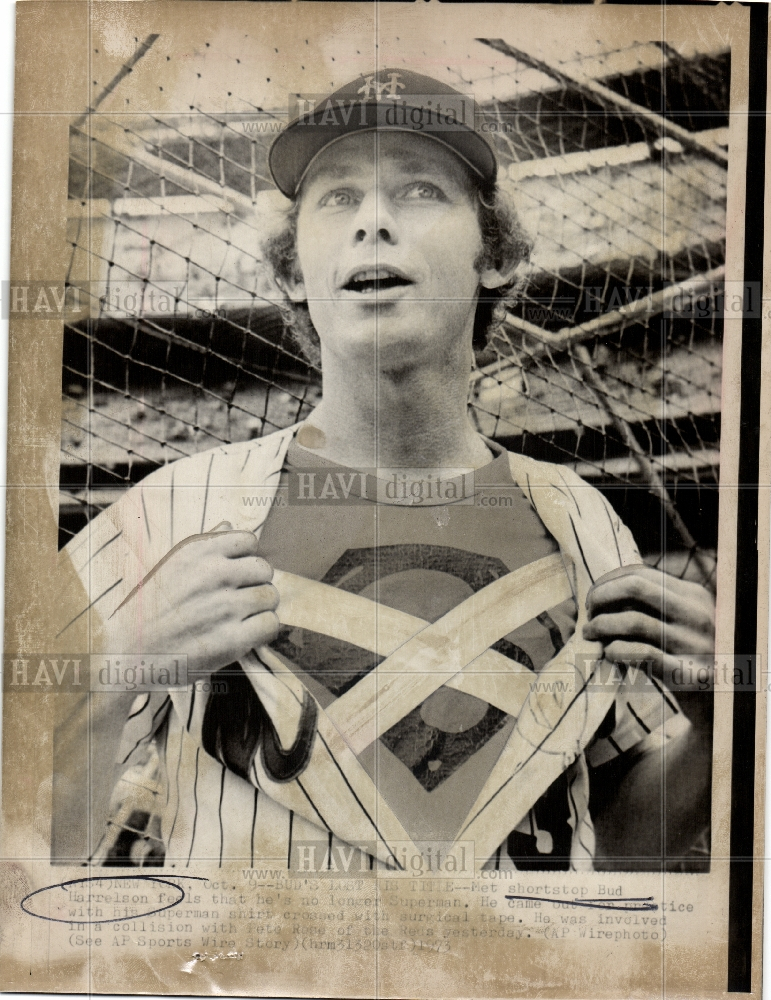
As an epilogue, Buddy Harrelson had a sense of humor about the whole thing.  The next day underneath his uniform he donned a Superman T-Shirt, showing he was not so "super".  The fight was voted one of the top ten moments in Shea Stadium History by Mets fans.


Friday, October 5, 2012

Exploring The Solar System - Part I Asteriods and Meteorities

I briefly mentioned before that I like space exploration and all of the discoveries that go along with it.  On my computer I have at least a dozen bookmarks of NASA's current and past manned and unmanned missions.  Missions and spacecrafts like Viking, Pioneer, Voyager, Spirit and Opportunity, Cassini, Dawn, New Horizons (Pluto), Galileo, Juno, MESSENGER, Apollo, Orion, Gemini and Mercury.  And the list goes on and on.

A few days ago on my facebook page I discussed the Dawn mission that is currently being undertaken.  Dawn is a spacecraft that is exploring several large Asteroids in the Asteroid Belt between Mars and Jupiter.


The image shown above is the asteroid Vesta which has a diameter of about 350 miles.  Below is a movie showing a full rotation of the asteroid.


This is not a recent mission as it has taken many years to reach the first of two destinations.  Dawn was launched in September 2007, arrived at Mars in February 2009 for a "gravity assist" maneuver to speed up it's velocity (a sort of slingshot effect around the planet).  It arrived at Vesta in July 2011, spent a year orbiting the asteroid, and recently departed this past July on to it's next destination the "minor planet" Ceres.  Ceres is large (a diameter of 600 miles, about as big as Texas).  It is an interesting destination because it is thought to contain large amounts of frozen water, and possibly a thin atmosphere.

Path of Dawn Spacecraft

In addition to the exploration aspects of the mission another interesting aspect of Dawn is the innovation of the spacecraft itself.  Most rockets and spacecraft use liquid fuels to create power and acceleration (the Apollo missions used this type of rocket).   A combination of hydrogen and oxygen is combined so that the spacecraft "burns" fuel and in an action/reaction type of deal, creates acceleration.  Dawn uses a different type of engine, an ION engine.  The principals of an ION engine is that it accelerates atoms and shoots them out the nozzle to create thrust.

ION engines have pluses and minuses.  The pluses are that it is very fuel efficient, it needs much less fuel than a traditional liquid fuel engine.  This means for the same weight of fuel, you can operate the engine for longer periods of time and have longer missions.  The minus is that acceleration is very slow.  It would take an ION engine about 4 days to go from 0 to 60 miles per hour.  However, in space, once you are traveling at a certain speed, you will stay at that speed (nothing in space to slow you down).  The Dawn spacecraft can continue to fire it's engine for days, weeks or months at a time and slowly build up speed, essentially being able to move faster than any conventional hydrogen/oxygen engine.  In theory, if you had an infinite amount of fuel this type of engine could eventually accelerate close to the speed of light, although it would take slightly over 122,000 years to reach that speed (LOL).  This type of technology was used successfully on the Deep Space 1 mission

Dawn is an Ion Powered Rocket

Why bother studying asteroids.  Fair questions.  Well one theory is that an asteroid large enough impacting the earth could have severe and possible fatal consequences for the entire planet.  We need to understand the threat.  In order to understand the threat we need close observations of these types of objects.

It is estimated that about 10% of all the meteorites that fall to earth are from an impact of the asteroid Vesta.  I don't know who is doing the estimation and how "they" know this, but I present it to you and you can take it for what it is worth.  Meteorites of all sizes fall upon the earth all the time.  Some are specs of dust and burn up harmlessly in the atmosphere as streaks.  Other large one fall to the ground.  Some even larger will make craters, like Meteor Crater in Arizona.


It may seem unlikely but meteors also fall on other planets and the moon and our space program even have pictures of these events and objects from other places than the earth.  We have recorded impacts of meteors on the moon in the past several years.

However the most fascinating (for me at least) is the fact that the twin Mars rovers Spirit and Opportunity discovered intact meteorites on the surface of Mars.  The first one discovered, shown in the pictures below was discovered shortly after the rovers arrived on Mars in 2004.  Opportunity when inspecting it's discarded heat shield used during the entry into martian atmosphere, observed a strange rock in the background.  Upon closer examination both photographically and spectrally using on board instruments, it was determined to be a meteorite.

Heat Shield Rock - A Meteorite on Mars

Closeup of Heat Shield Rock

As it turns out, meteorites are pretty common on Mars as the twin rovers over the next 8 years discovered at least a half a dozen other ones.


The universe is a fun place with lots of discoveries yet to be found.  You never know what lies around the next bend.

We will examine the Mars Rovers and other space program topics in future posts.

Friday, September 28, 2012

Ball On The Wall Play

Another thing that I love with a passion is baseball.  My favorite team is the New York Mets.  Unfortunately this year the Mets who were in the pennant race up until the All Star game (in July) summarily took a nose dive afterwards and lost something like 10 of 12 and were never in the race again.

This was not true in 1973, when an injury plagued Mets team who were in last place in the National League East on the last day of August got hot and managed to leap over all 5 division teams into first place and a pennant that year.  Though the team finished 82-79, a mere 3 games over 500 that was good enough to beat out the Cardinals by a game and a half.


One of the plays that symbolizes the amazing comeback of the "Ya Gotta Believe" '73 Mets was the "Ball On the Wall" play against the Pirates.

It was September 20th, 1973.  The Pittsburgh Pirates had a 1.5 game lead over the Mets at the time.  This game went into extra innings.  With 2 outs in the top of the 13th and Richie Zisk on 1st for the Pirates, Dave Augustine (a rookie) hit a fly ball to left field that looked like it was going to be a home run.  Somehow the ball hit off the top of the wall, rebounded to Cleon Jones in Left Field who threw a strike to the cutoff man, Wayne Garrett.  Garrett relay throw was a on line one bouncer to rookie Ron Hodges who managed to tag the runner for the 3rd out of the inning.   This became know in Mets lore as the "Ball On The Wall" play.   Hodges was a rookie at the time and in fact their third string catcher who was playing due to injuries to the other catchers Jerry Grote and Duffy Dyer.


As usually happens in story book finishes, With a runner on 2nd Hodges came up in the bottom of the inning and singled the winning run home.  The Mets would win against the Pirates the following night as well pulling into sole possession of first place.  I actually watched this game on a small Black and White TV set in my bedroom (up waaaaaaaaaaaaaaaaaaaaaayyyyyyy.......... past my bedtime, LOL).

It was a wild race till the end of the season.  With 2 days left in the season it was still mathematically possible for the season to end in a 5 way tie for first place, as the Mets would need to play back to back double headers to end the season in Chicago.  On the final day of the regular season, the Mets had a double header rained out at Wrigley Field and needed to play the doubleheader one day after the official season was over.  The Pirates who were still in the hunt also had to make up a earlier rainout game with San Diego.  At the start of play on the day after the season should have been officially over, a three way tie between the Mets, Pirates and Cardinals was still a real possibility.  In the drizzle of early October, the Mets won the first game of the doubleheader, eliminating the Pirates and Cardinals and clinching the NL East.  The second game of the doubleheader was canceled.


Final Standings 1973 NL East

                   W   L    GB     PCT
Mets          82   79   ---     .509
Cardinals    81   81   1.5    .500
Pirates       80    82   2.5    .494
Expos        79    83   3.5    .488
Cubs         77    84    5      .478
Phillies        71   91   11.5  .438


The Mets went on to beat the Reds in a 5 game National League Championship playoff and meet the Oakland A's in the World Series.  I will have more to say about the '73 Mets in a future post, but this was one of my all time favorite teams !

Wednesday, September 5, 2012

The Moon Landing


A little more than a week ago Neil Armstrong passed away.  I was very sad to hear this.   I considered Armstrong and the other astronauts of his time, brave and courageous people.  His death however, marks the loss of another major player in one of the most vivid memories of my childhood and/or my entire life, and has caused for me, a time of reflection.

I have been a fan of the space program both manned and unmanned for as long as I can remember, longer than before the moon landings, though it is tough to say for how long before.  I remember having a cheap plastic bank (a Savings Bank giveaway) as a child which was shaped like a replica of the "Friendship 7", the Mercury space capsule that John Glenn rode when he orbited the earth 3 times in 1962. 


Cheap Plastic Bank identical to mine,  for sale on eBay for $60.00


I however do not remember that particular mission as I would have been far too young.  I also recall a globe which my family owned, that showed the orbital path of Glenn's spacecraft, and 4 cent first class postage stamps from that era from my father's stamp collection.


All that being said, I started off this post with recollections of the first moon landing and moon walk.  It was the summer of 1969.  Thanks to the Internet I now know that the date was July 20th. 

It was the summer and as such that ment packing up a great deal of things and temporarily moving away from our house from late June until late August.  My father worked for a youth organization  [B*y Sc**ts of America] and like most summers we would be spending it away at some distant Sc**t camp.  Our destination that year (and the previous summer) was a camp in the Adirondack Mountains of New York state.


This was not just any summer camp but was actually one of the historic "Great Camps" of the Adirondacks, namely Camp Uncas which had been donated to this youth organization and was converted into a B*y Sc**t summer camp.  In some future posting I will go into Uncas' history further, but for the curious, check out the pictures below and the following link. 

This was a fun place to spend a summer with lots of kids to play with , a lake (swimming, boating), woods, old time crank telephones, an old slate pool table, and as many taxidermy animals as you could count.  There was even a real bear skin rug.  It was rather spooky however in the dim light with all those dead animals around.


Dinning Hall where we watched the moon walk.


One unique thing about being in the Adirondack mountains was the almost total isolation from civilization.  We were 3 miles down a dirt road on a peninsula with Mohegan Lake surrounding us on 3 sides.  The closest town was that of Raquette Lake about 5 miles away.  Once a week someone from the camp would venture out to pick up the camp's mail from the post office in Raquette Lake.  Once in a while for a "treat", my father would take a bunch of us on a garbage run to the local dump to watch (at a distance) the black bears root through the trash at the dump.

There was only one television in the whole camp and it was located in the main dining hall.  There was no such thing as cable or satellite TV, no MSNBC, CNN or Foxnews.  The big 3, ABC, CBS and NBC were our only choices.  This black and white television was old, probably dating back to the late 50's and had a pair of "rabbit ears" antenna.  Also the closest television station was located in Utica NY which was a two hour drive away, and because of the distance and the mountains in between, the picture was at best snowy.


On this particular Sunday night in July everybody at the camp, families, staff and kids [not the campers however] crowded around the 19" TV to watch the coverage of the moon walk, there was probably 20 to 30 people.  The coverage started maybe at 9:00 pm and it wasn't until nearly 11 pm when the first steps on the moon occurred.  Two and half hours later the astronauts (Armstrong and Aldrin) were back in their lander (almost 1:30 AM EDT) with Mike Collins circling above them in the command module. 

I can't say that I stayed awake for the entire moonwalk, but I know it was a big deal.   First, to be able to watch television at all, and second to be allowed to stay up to that late hour.  I have vivid memories of all the people there, of the small black and white TV and the snowy picture, the ghost like images from the moon, and the fact that my parents felt it was important enough to keep all of us up until well after midnight.

I followed every Apollo mission with a passion after that, up to and including Apollo 17 in December of 1972.  I still have newspaper clippings preserved in a scapbook from these later missions.  I even followed the Skylab missions after the moon landings had ended, and followed the landing on Mars of the Curiosity Rover earlier this summer.  I have never lost my interest in the space program even though (it seems) many in our country have.

Because of this passion and interest in the space program I have done much reading.  On the bookshelf in my office I see the following titles:  A Man On The Moon;  Flying To The Moon; Cosmos; and Pioneer Odyssey.  Through this reading (and watching of documentaries) I discovered that many of the astronauts of that era, were not the type of people you may have wanted to have over for Thanksgiving dinner as they were a little "rough" around the edges.  They were binge drinkers (boarderline alcholics), serial womanizers, and quite frankly vulgar, with a stream of profanities emanating from their mouths (see this  Book and this Mini Series).  Armstrong, however from what I can gather, was very humble man and most likely would not be counted in the "fast and lose" astronaut group.


As an epilogue, My Father purchased the Life Magazine commemorative issue on the moon landing later that summer.  I have crisp memories of reading it over and over and over again, to the point that the magazine cover came off and some of the pages developed creases and rips.  I also remembered that I got in trouble because of this and shortly thereafter the magazine disappeared, not to be seen by me again.  I was sad to see the magazine disappear and was also sad that I damaged (through frequent reading) a magazine that my father felt was important.  In another era I could have purchased for him a new copy off of eBay. Sadly time travel would not be invented for another 16 years, and no replacement was ever purchased.


All and all, it was a very memorable time for both our country, my family and myself.  I will never forget watching the whole thing unfold on a snowy television screen, isolated in the mountains of New York state on a hot July night so many years ago.  We have all lost a little bit of ourselves with the passing of Neil Armstrong.